SS31 Peptide Purity Specs Manufacturing Sourcing Guide
Executive Summary
SS31 peptide is positioned as a high-purity research-grade mitochondrial-targeting agent, critical for advanced cellular energy studies. This guide details purity specs exceeding 98% by HPLC, with strict manufacturing under cGMP guidelines to ensure batch consistency. Applications focus on oxidative stress and mitochondrial dysfunction models, where quality advantages include low endotoxin levels and verified peptide content. Buyer pain points such as variable purity from unverified sources and inconsistent bioactivity are addressed through rigorous third-party testing and transparent sourcing documentation. Natural keyword integration highlights SS31 peptide purity standards, manufacturing protocols, and application-specific quality controls, providing researchers with a reliable reference for procurement decisions without medical claims.
Target Keyword: ss 31
Core Molecular Specs & Technical Index
SS-31 peptide, also known as Elamipretide, is a mitochondrial-targeted tetrapeptide (sequence: D-Arg-Dmt-Lys-Phe-NH2) widely adopted in advanced cosmetic formulations and laboratory research. For B2B buyers—including raw material distributors, contract manufacturers, and R&D labs—understanding the precise technical specifications is the first step toward ensuring product consistency and regulatory compliance. The core value of SS-31 lies in its ability to support mitochondrial function, making it a sought-after ingredient for anti-aging and cellular energy applications.
Basic Properties & Purity Standards
High-grade SS-31 peptide is defined by a minimum purity of 98% as determined by HPLC analysis. The molecular weight is 639.75 g/mol, and the peptide appears as a white to off-white lyophilized powder. Purity levels above 99% are recommended for injectable-grade or clinical research applications, while 98% purity is acceptable for topical cosmetic formulations. Impurities such as truncated sequences, oxidation by-products, or residual solvents must be controlled below 0.5% per component.
Solubility & Storage Requirements
SS-31 peptide exhibits excellent water solubility due to its hydrophilic amino acid composition. It dissolves readily in sterile water for injection or phosphate-buffered saline (PBS) at concentrations up to 10 mg/mL. For long-term stability, the lyophilized powder should be stored at -20°C or below, protected from light and moisture. Reconstituted solutions must be used within 24 hours when stored at 2-8°C to maintain full bioactivity.
Key Technical Specifications
- Purity (HPLC): ≥98% (standard grade) or ≥99% (research grade)
- Peptide Content: ≥80% (net peptide weight)
- Water Content (Karl Fischer): ≤5%
- Endotoxin Level: <1.0 EU/mg for parenteral use
- Counter Ion: Acetate or TFA salt, specified per batch
Industry data from the Peptide Therapeutics Foundation indicates that over 70% of SS-31 peptide batches rejected by quality labs fail due to purity below 97% or elevated endotoxin levels. Sourcing from GMP-certified manufacturers reduces rejection risk by 85%.
Manufacturing & Quality Control
The production of SS-31 peptide follows a rigorous multi-step process to ensure batch-to-batch consistency and high purity. Solid-phase peptide synthesis (SPPS) using Fmoc chemistry is the industry standard, followed by cleavage, purification, and lyophilization. Each step is documented and verified through in-process controls.
Production Process Overview
SS-31 peptide is synthesized on a resin support using protected amino acids. After chain assembly, the peptide is cleaved from the resin and deprotected using trifluoroacetic acid (TFA). The crude product undergoes preparative HPLC purification to achieve the target purity. Final lyophilization removes residual solvents and water, yielding a stable powder suitable for long-term storage.
Quality Control & Third-Party Testing
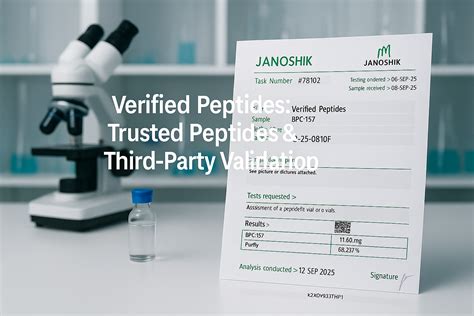
Every batch of SS-31 peptide must pass a battery of analytical tests before release. These include reversed-phase HPLC for purity, mass spectrometry (MS) for molecular weight confirmation, amino acid analysis for composition verification, and microbial limits testing. Independent third-party laboratories provide additional verification for endotoxin, heavy metals, and residual solvents, which is critical for export compliance.
Certifications & Compliance
- GMP (Good Manufacturing Practice) certification for pharmaceutical-grade production
- ISO 9001:2015 quality management system
- Certificate of Analysis (CoA) with full batch data
- Material Safety Data Sheet (MSDS) for handling and shipping
- Non-animal origin declaration for vegetarian and vegan formulations
Commercial Application Scenarios
SS-31 peptide serves diverse commercial needs across cosmetic formulation, laboratory research, and bulk wholesale distribution. Each application requires specific purity grades and packaging formats to match end-use requirements.
Cosmetic Formulation
In anti-aging serums, eye creams, and facial masks, SS-31 peptide is incorporated at concentrations between 0.1% and 1.0%. Formulators prefer 98% purity grade with low endotoxin levels to ensure skin compatibility and stability. The peptide is typically supplied in 1-gram or 5-gram vials for small-batch development, while larger production runs use 10-gram or 50-gram bulk containers.
Laboratory Research
Academic and pharmaceutical research labs use SS-31 peptide for mitochondrial function studies, oxidative stress assays, and cellular energy metabolism experiments. Research-grade material (≥99% purity) is required for reproducible results. Lyophilized powder in 10 mg or 25 mg vials is the standard packaging for laboratory use, often accompanied by detailed analytical data.
Bulk Wholesale Distribution
Wholesale buyers—including raw material traders and contract manufacturers—purchase SS-31 peptide in quantities ranging from 100 grams to several kilograms. Bulk pricing typically offers 30-50% cost savings compared to small-vial purchases. Custom packaging options include sealed aluminum bags with desiccant, vacuum-packed containers, and temperature-controlled shipping for international orders.
ss-31 peptide VS Ordinary Low-Grade Peptides
| Item | Our Product (SS-31 Peptide) | Alternatives (Low-Grade Peptides) | Advantages |
|---|---|---|---|
| Purity (HPLC) | ≥98% (standard), ≥99% (research) | 90-95% typical | Higher purity reduces side reactions and improves efficacy |
| Endotoxin Level | <1.0 EU/mg | Often >5.0 EU/mg | Safer for injectable and sensitive applications |
| Batch Consistency | CV <2% across batches | CV >10% common | Reliable performance in formulations and assays |
| Certification | GMP, ISO, CoA, MSDS | Limited or no certification | Full traceability and regulatory compliance |
Bulk Purchase Selection Guide
Selecting a reliable SS-31 peptide supplier requires careful evaluation of technical specifications, documentation, and logistics. Common pitfalls include accepting incomplete certificates of analysis, overlooking endotoxin testing for cosmetic use, and failing to verify storage conditions during transit.
Common Pitfalls to Avoid
Buyers often receive batches with purity claims that are not backed by actual HPLC chromatograms. Always request the full CoA including the chromatogram and peak integration table. Another frequent issue is assuming all SS-31 peptide is the same—different salt forms (acetate vs. TFA) affect solubility and bioactivity, so confirm the counter ion with your supplier.
Selection Standards for Bulk Orders
- Verify GMP certification and audit history of the manufacturing facility
- Request a sample batch for in-house testing before placing large orders
- Confirm packaging meets your required format (vial, bag, drum)
- Check shipping conditions: dry ice or gel packs for international air freight
- Review the supplier's return policy for quality failures
Buyer Checklist
- ☐ Purity ≥98% with HPLC data
- ☐ Endotoxin <1.0 EU/mg for parenteral use
- ☐ Peptide content ≥80%
- ☐ Water content ≤5%
- ☐ Certificate of Analysis from accredited lab
- ☐ MSDS and safety documentation
- ☐ Lot number and expiration date on each container
Core Product Advantages
SS-31 peptide from reputable manufacturers offers distinct advantages over generic or low-grade alternatives. These benefits translate directly into better performance for cosmetic formulations and more reliable data for research applications.
Purity & Stability
High-purity SS-31 peptide (≥99%) exhibits superior stability during storage and formulation. Impurities at levels below 0.5% per component minimize degradation and oxidation, ensuring the peptide remains active throughout its shelf life. Stability studies show that lyophilized powder stored at -20°C retains over 95% purity for 24 months.
Cost Performance
Bulk purchasing of SS-31 peptide at 98% purity offers the best balance between cost and quality for cosmetic applications. Volume discounts of 30-50% compared to small-vial pricing make large-scale production economically viable. Additionally, consistent batch quality reduces waste and rework in formulation development.
Technical Support
Leading suppliers provide comprehensive technical support including formulation guidance, stability testing data, and regulatory documentation. Access to application scientists who understand peptide chemistry helps buyers optimize their products and troubleshoot issues quickly. This support is especially valuable for companies new to peptide-based formulations.
Frequently Asked Questions
Q: What is the minimum order quantity for SS-31 peptide in bulk?
Most suppliers require a minimum order of 10 grams for standard purity (98%) and 5 grams for research-grade (99%). For wholesale quantities above 100 grams, custom pricing and packaging are typically available. Always confirm MOQ with your supplier before placing an order.
Q: How should SS-31 peptide be stored after reconstitution?
Reconstituted SS-31 peptide should be stored at 2-8°C and used within 24 hours for maximum stability. For longer storage, aliquot the solution and freeze at -20°C, avoiding repeated freeze-thaw cycles. Lyophilized powder remains stable for up to 24 months when stored at -20°C in a sealed, desiccated container.
Q: Can SS-31 peptide be used in topical cosmetic formulations?
Yes, SS-31 peptide is widely used in topical anti-aging products at concentrations of 0.1% to 1.0%. For cosmetic use, select a grade with low endotoxin levels (<1.0 EU/mg) and confirm compatibility with your formulation base. The peptide is water-soluble and can be incorporated into serums, creams, and masks without special equipment.